
Google Pay
Ezypay now supports Visa and Mastercard payments via Google Pay. This gives customers a fast, secure way to pay using their saved Google Pay credentials — helping increase conversion rates.
All merchants must adhere to the Google Pay APIs Acceptable Use Policy and accept the terms defined in the Google Pay API Terms of Service.
👉 To learn more about Google Pay, visit the Google Pay website.
- Kindly refer to supported payment methods for the regional availability of Google Pay.
- Google Pay is not supported in legacy Hosted Payment Page.
How Google Pay Works
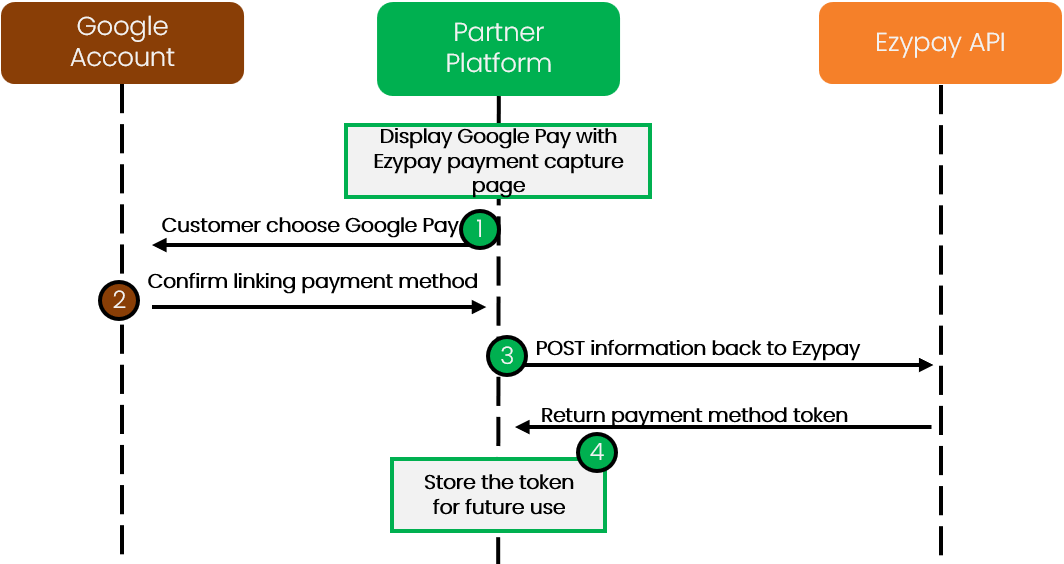
Google Pay functions as a secure pass‑through payment method within Ezypay. It allows customers to pay using the card stored in their Google Wallet without exposing raw card details directly. Ezypay returns a payment method token, which can be safely stored and reused in the same way as any other card‑on‑file token.
Google Pay supports both recurring and one‑off payment flows.
-
Recurring Payments
Collected through the Payment capture page, which returns a reusable payment method token for ongoing billing. It can then be used in a subscription or on-demand invoice to process recurring payments.
-
One-off Payments
Supported through two options:
- Payment capture page - Collects a token that can be used immediately or stored for later use. It can then be used with on-demand invoice to create one-off payment.
- Checkout - Displays a Google Pay button for instant payment and returns a token that can also be reused if needed.
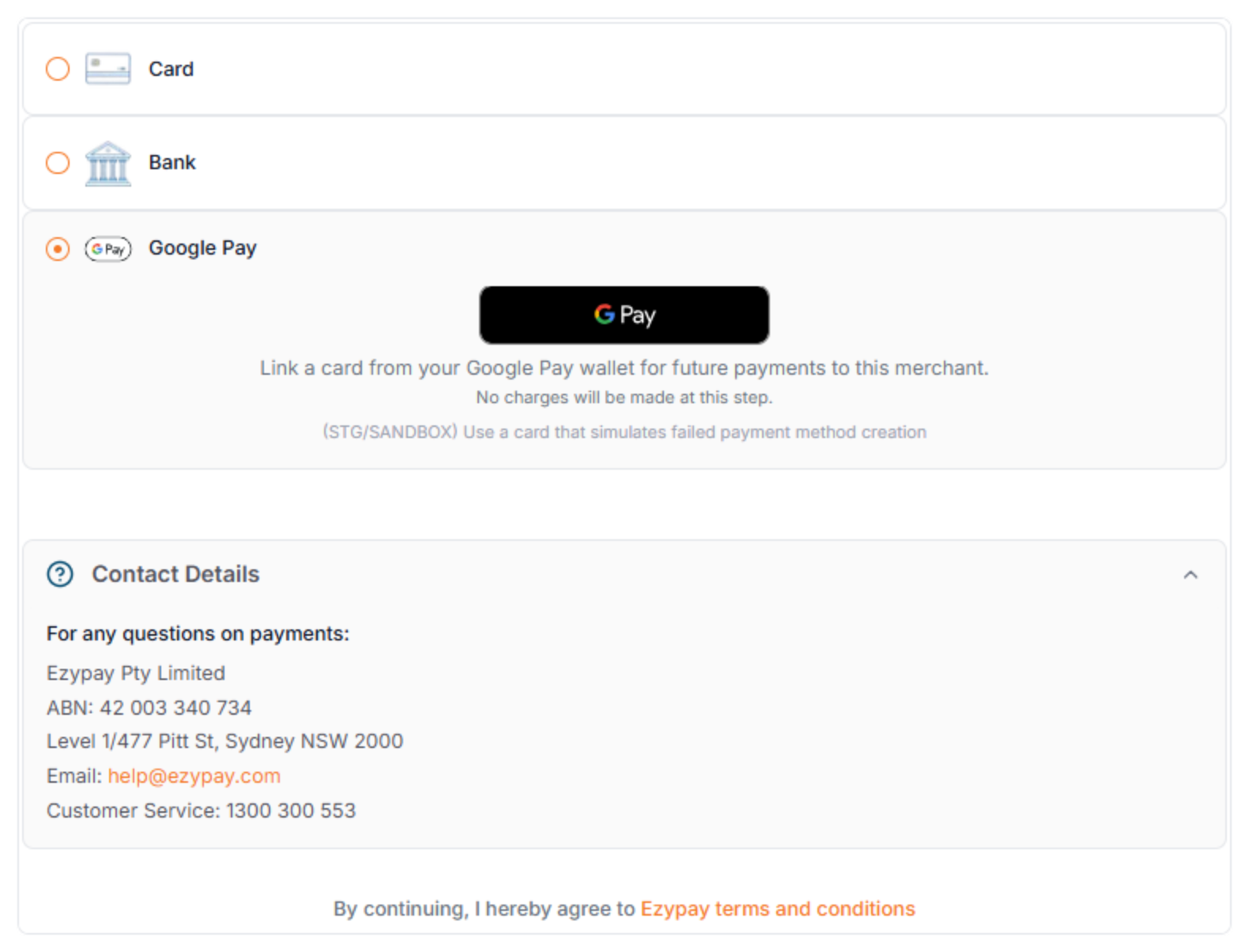
- Customer selects the Google Pay accordion and click the Google Pay button
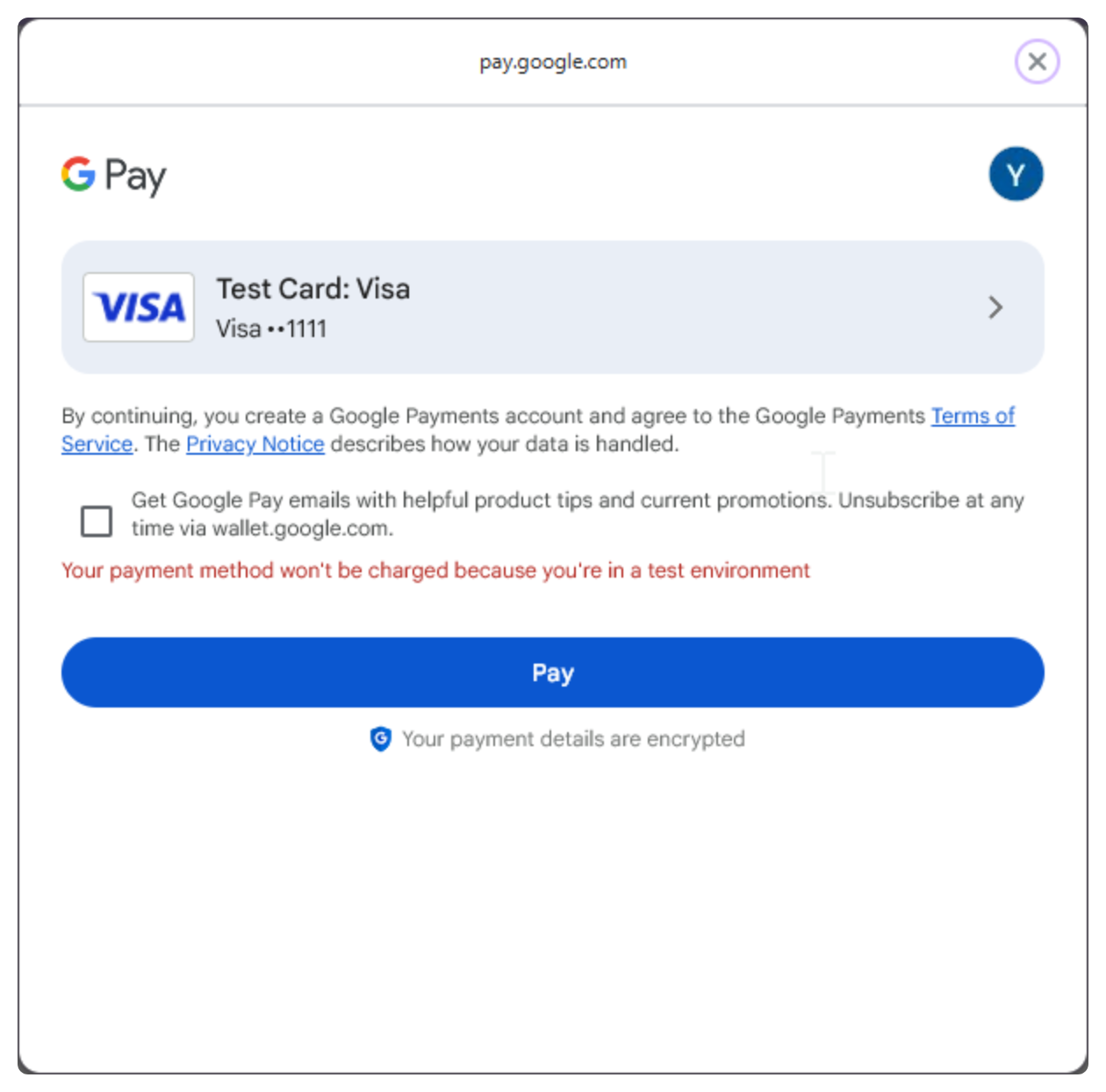
2. Customer's Google Pay accounts will pop-up and ask for authorisation
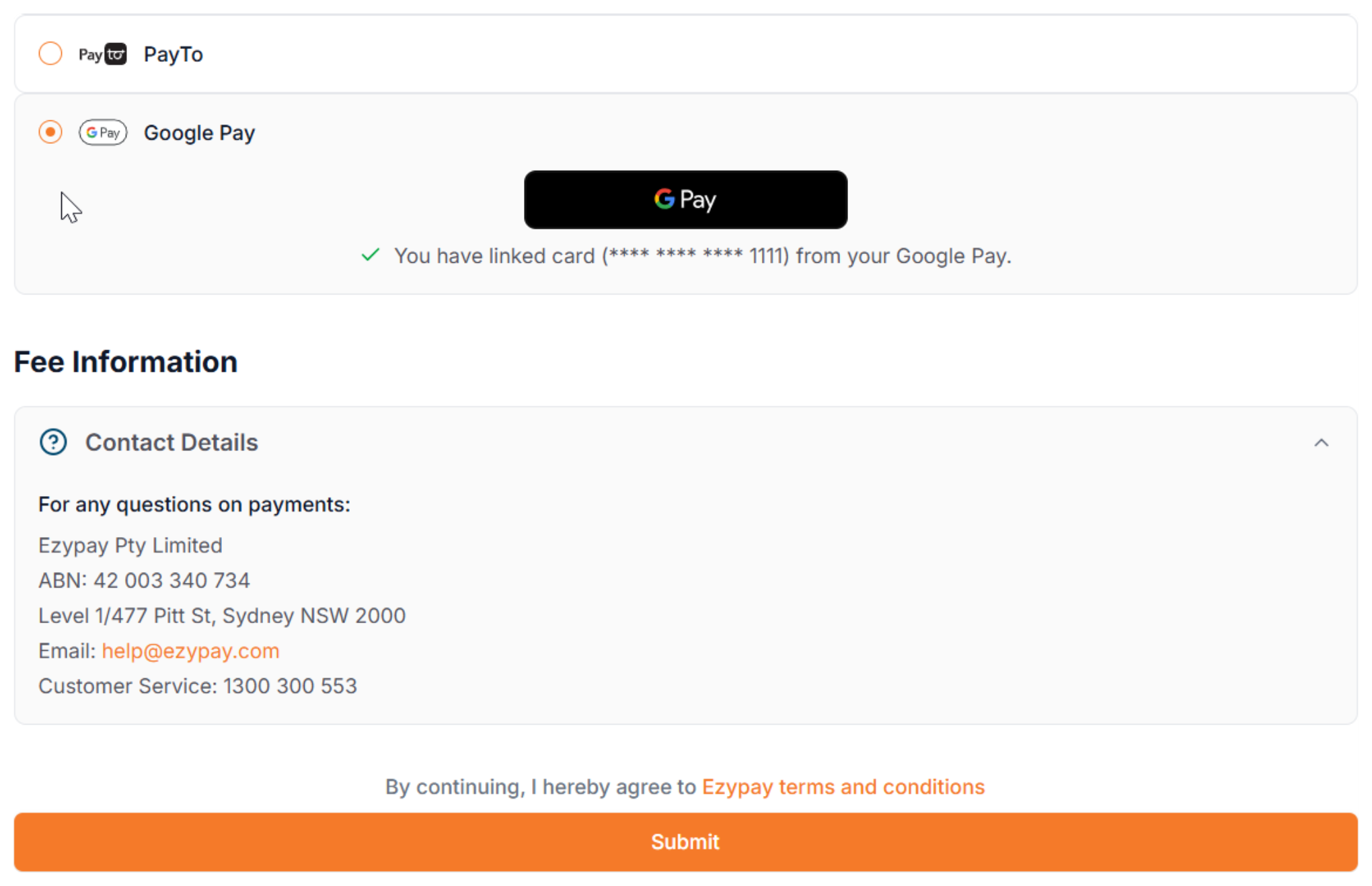
3. Customer chose to link their cards
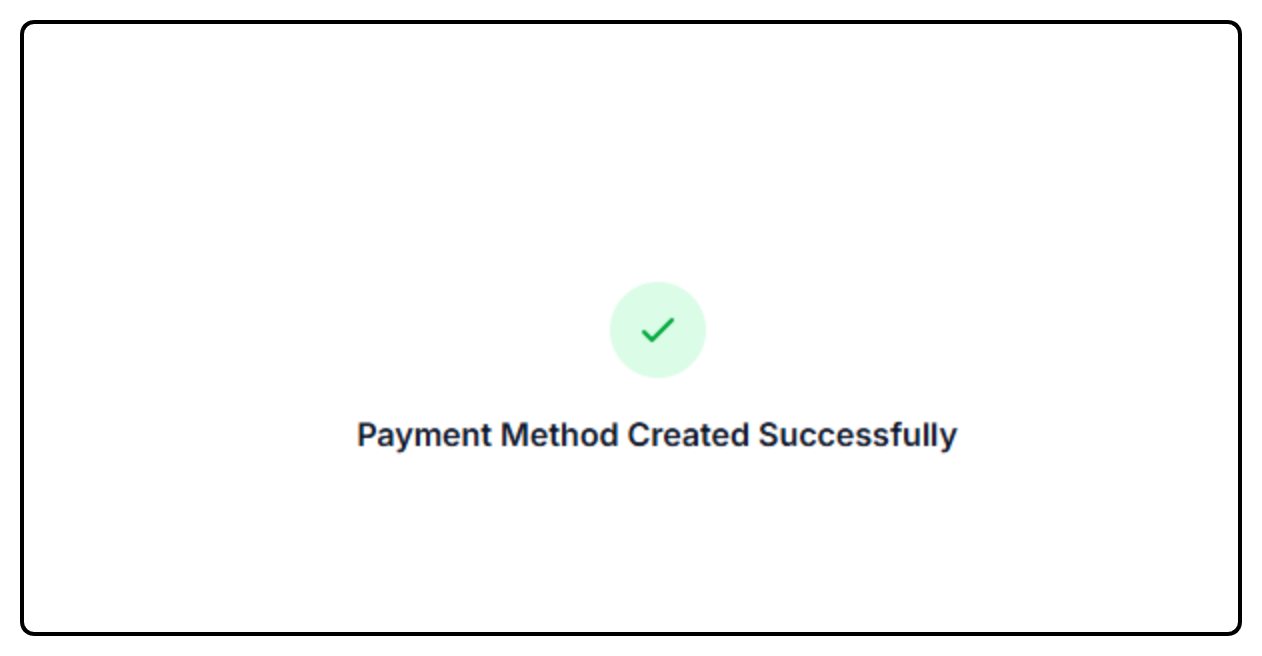
4. Payment Method is successfully created and payment method token is returned
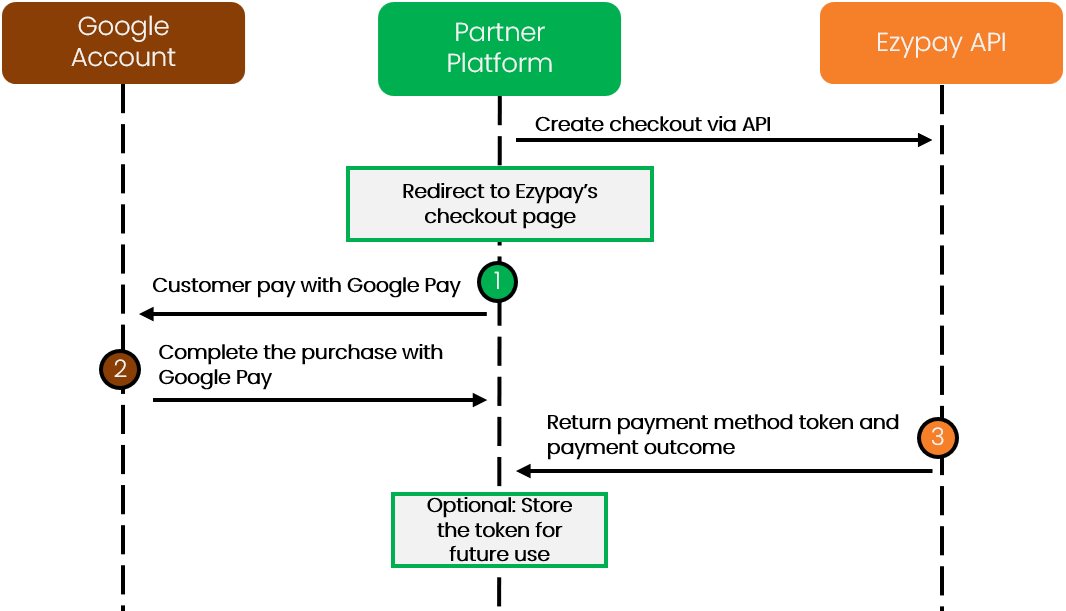
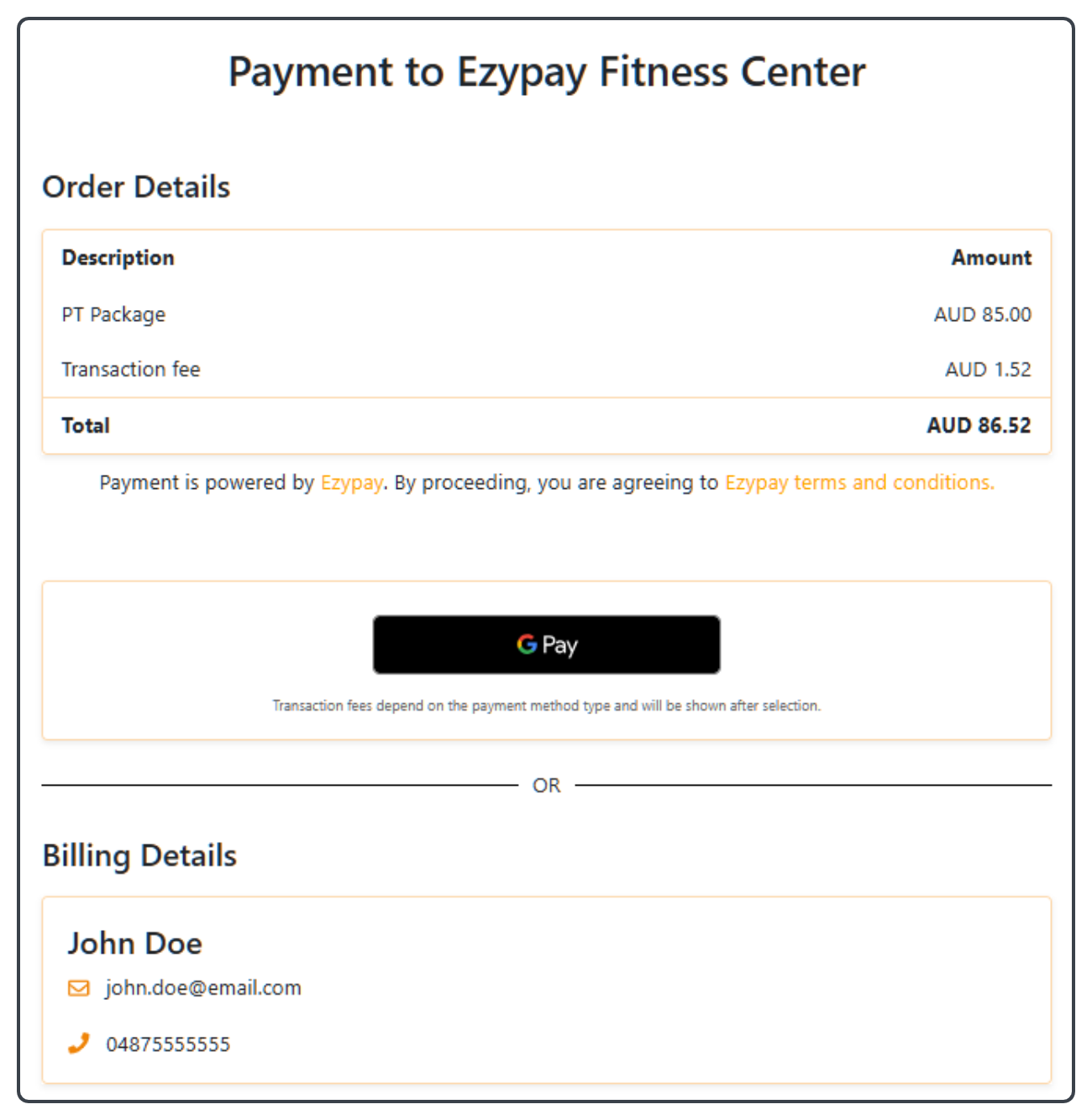
- Checkout page will show the amount payable and a Google Pay Button
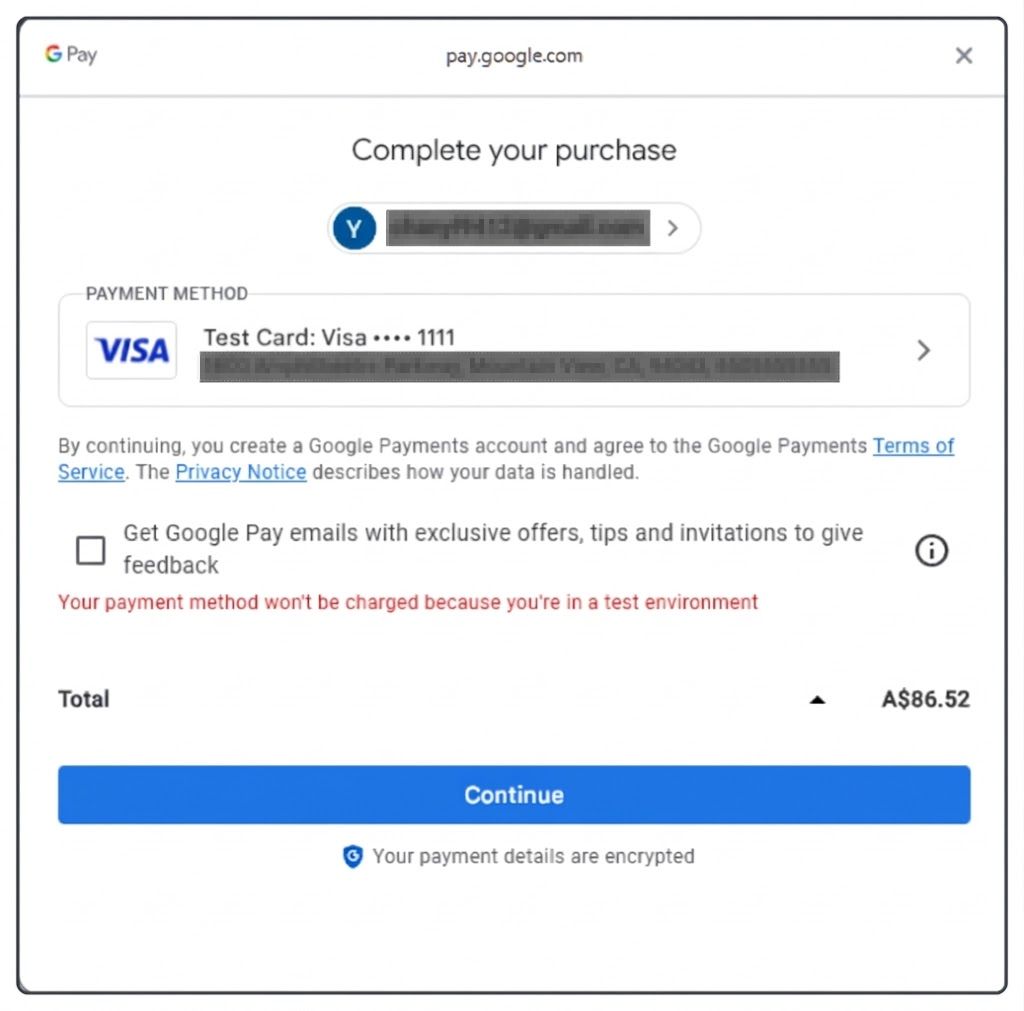
2. Customer's Google Pay accounts will pop-up and they will need to complete the payment
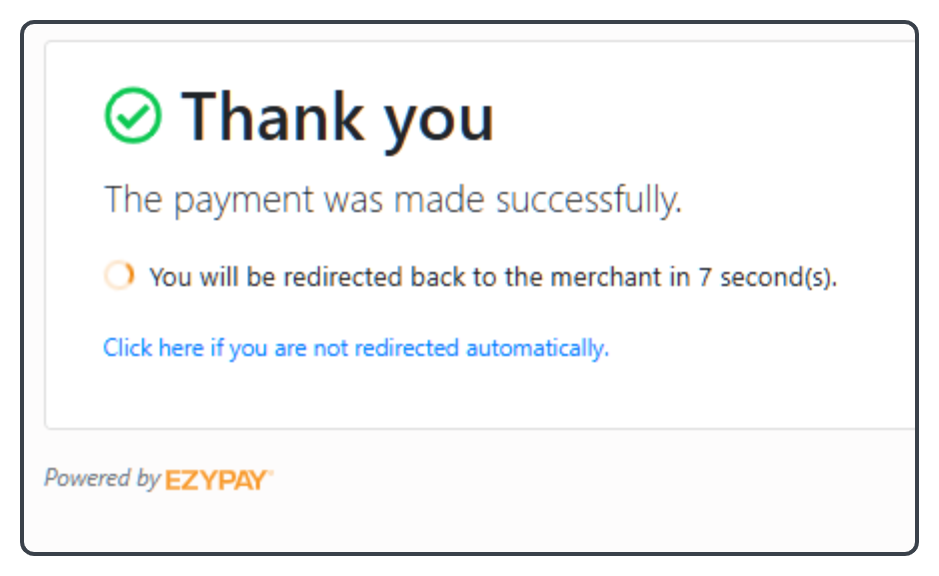
3. Invoice paid successfully
Integration Notes for Developers
Payload Structure
When a customer pays using Google Pay, Ezypay returns a tokenized card payload. Example:
{
  "data": {
    "paymentMethodToken": "785095a8-a40c-4d41-b913-97b1bdcb5f0a",
    "customerId": "88379c2b-3be2-4e54-b922-b5d3a4815afe",
    "type": "CARD",
    "bank": null,
    "payTo": null,
    "card": {
        "first6": "411111",
        "last4": "0121",
        "accountHolderName": "Card Holder Name",
        "type": "VISA",
        "expiryMonth": "10",
        "expiryYear": "29",
        "origin": "googlepay",
        "tokenDetails": null,
        "tokenized": false
    },
    "invalidReason": null,
    "lastUsedOn": null,
    "replacedPaymentMethodData": null,
    "wallet": null,
    "valid": true,
    "primary": true
  }
}
{
"data": {
"paymentMethodToken": "b3945926-ba8b-42fb-b00b-3e50b70d9cee",
"customerId": "89d36440-c7c9-4e0d-aab0-c9e38d249390",
"type": "CARD",
"bank": null,
"payTo": null,
"card": {
"first6": "411111",
"last4": "1111",
"accountHolderName": "test",
"type": "VISA",
"expiryMonth": "3",
"expiryYear": "27",
"origin": null,
"tokenDetails": null,
"tokenized": false
},
"invalidReason": null,
"lastUsedOn": null,
"replacedPaymentMethodData": null,
"wallet": null,
"valid": true,
"primary": true
}
}
Key Fields
| Object information | Description |
|---|---|
data.card.paymentMethodToken | Ezypay's token representing the Google Pay method |
data.card.accountHolderName | Template name used to identify the Google Pay payer |
data.card.last4 | Last four digits of the real card linked to Google Pay |
data.card.expiryMonth / expiryYear | The expiry of the real card linked to Google Pay |
data.card.type | Ezypay provide what type of CARD was attached to the Google Pay account. |
data.card.origin | Should be "googlepay" to indicate origin May be null if the customer enters actual PAN manually |
Display Format
When showing Google Pay transactions in your UI, use the following format:
[Google Pay] | Visa ****1234

Refer to the Google Pay Brand Guidelines for official assets and usage rules.
Refer to the Sandbox Guide to test Google Pay transactions.
Updated 24 days ago